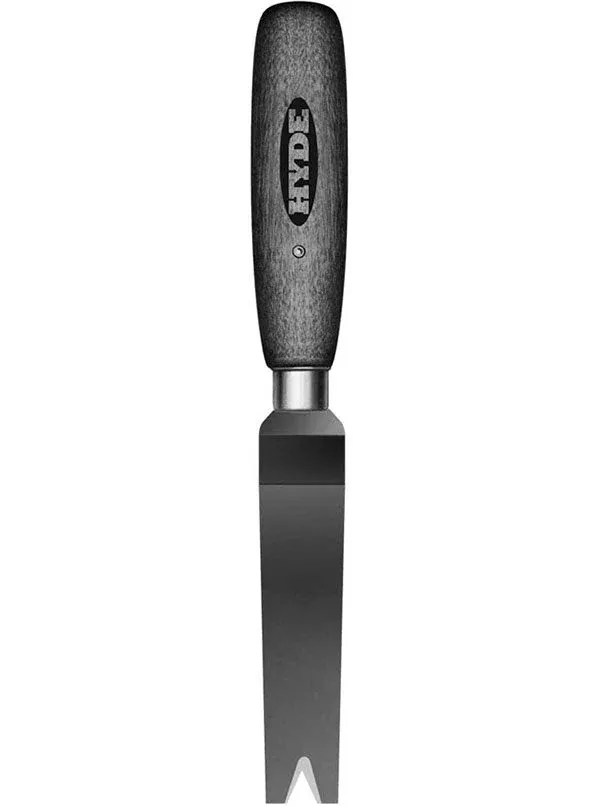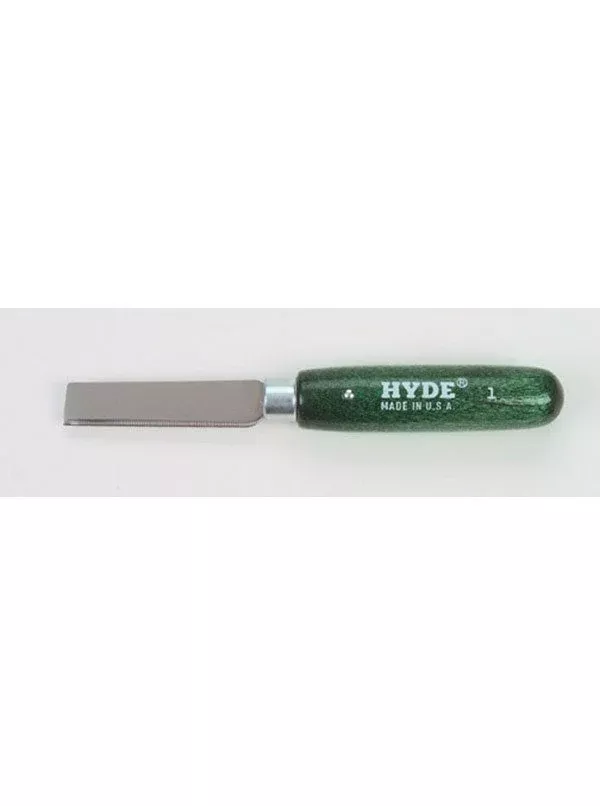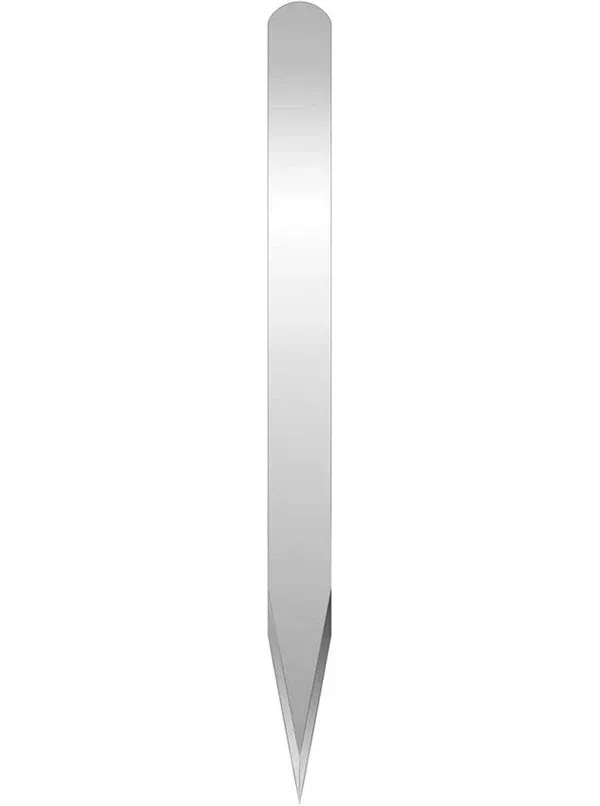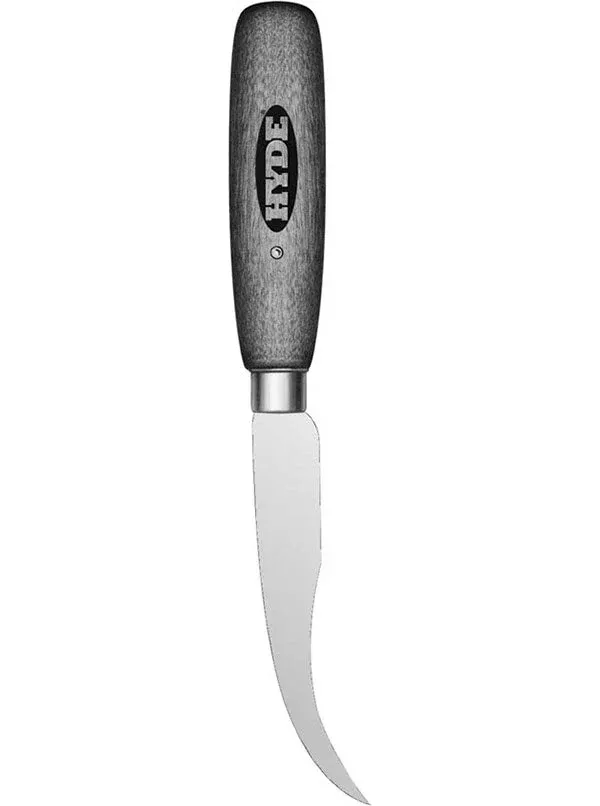
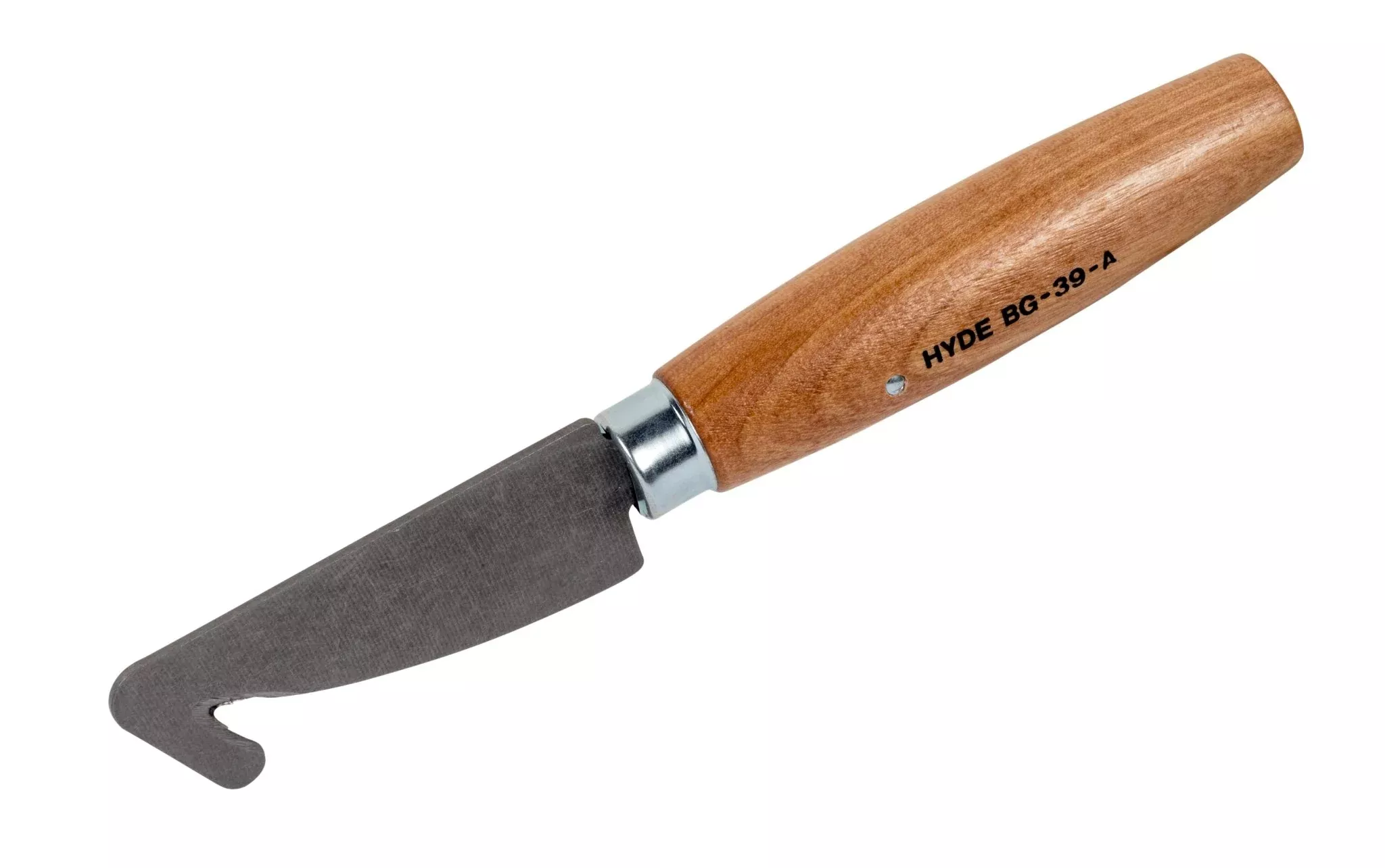
Is this the right tool for your job?
✕CHOOSE A DIFFERENT TOOL WHEN
- Piercing or mid-field starts. No point, captured throat — it cannot begin a cut in the middle of a sheet. That is the open-point flooring and carpet hawkbills’ job (20200-wing; 54020/54040).
- Through-cuts a square point makes. Severing flexible stock on a bench by drawing a straight edge — leather, belting, gasket, foam — belongs to the square points and the mill knife; the hook is a substrate-protecting sheet tool, not a general cutter.
- The flexible plantation banana-knife jobs. De-handing, de-leafing, and selecting fruit are done with long, flexible banana knives; this is the short, stiff linoleum hook and does not do that work (§6).
- Scraping, prying, or striking — a ground hooked edge in a wooden handle.
- A carry answer of its own without the right sheath. A straight belt sheath won’t safely swallow a hooked blade; the 42700 hook-knife sheath is shaped for it (§5).
Jobs this tool does
EXACT JOB METHODS FOR HYDE №67090✓ Job guideHow to Carry a Hook Knife SafelyOPEN JOB GUIDE →✓ Job guideChoose Capture Geometry: V-Cut vs HookOPEN JOB GUIDE →✓ Job guideHow to Cut Paneling, Sheet Mica, and Veneer with a Hook KnifeOPEN JOB GUIDE →✓ Job guideHow to Rough-Cut Carpet from the BackOPEN JOB GUIDE →
VIEW 1 MORE DOCUMENTED JOB
✓ Job guideSever Sheet Goods Without Scoring What Is BeneathOPEN JOB GUIDE →
For these jobs—use this instead
THE JOB, THE REASON, AND THE BETTER TOOL✕ Piercing or mid-field startsNo point, captured throat — it cannot begin a cut in the middle of a sheet. That is the open-point flooring and carpet hawkbills’ job (20200-wing; 54020/54040). BETTER TOOL Flooring Long Point Knife, 2-1/2” 20200 →✕ A carry answer of its own without the right sheathA straight belt sheath won’t safely swallow a hooked blade; the 42700 hook-knife sheath is shaped for it (§5). BETTER TOOL Hook Knife Sheath 42700 →
How the pros run it
01
Pull; never plunge
The hook is made to pull from an edge: start each cut over an edge and draw toward yourself so the material feeds into the throat. It is for edge-start cuts, not plunge cuts in the middle of a sheet. Keep your body and off hand out of the pull line. If a hook breaks free, it lunges toward the puller; the cutting hand draws toward the body, so keep your off hand and thighs clear of and behind the blade path. This is kneeling floor work, so plan the stroke. Let the hook protect the substrate: keep the cut in the throat, where the point rides above the floor by design, and avoid levering the tip down. Warm brittle sheet goods — linoleum and cold resilient goods can crack when forced; bring them to temperature. Sharpen the inside of the hook. The V-ground edge is on the inside of the curve, so hone it with a slip stone or round-edged stone worked along the inside of the hook, following the sweep and keeping the factory bevel. A flat bench stone cannot reach it, and grinding the outside face ruins the hook shape. Maintain the blade: high-carbon steel kept keen on a stone and wiped dry after wet flooring work can rust if neglected. That upkeep is the reason to own the fixed knife instead of using disposable hooks.
02
The asbestos boundary — load-bearing, carried from every flooring guide in this corpus
Old resilient flooring and the black cutback adhesive under it may contain asbestos in pre-1980s buildings. Test before cutting or disturbing it. That is an abatement decision, not a knife technique, and it stands in front of any tear-out or cut of old sheet goods regardless of which blade is in your hand.