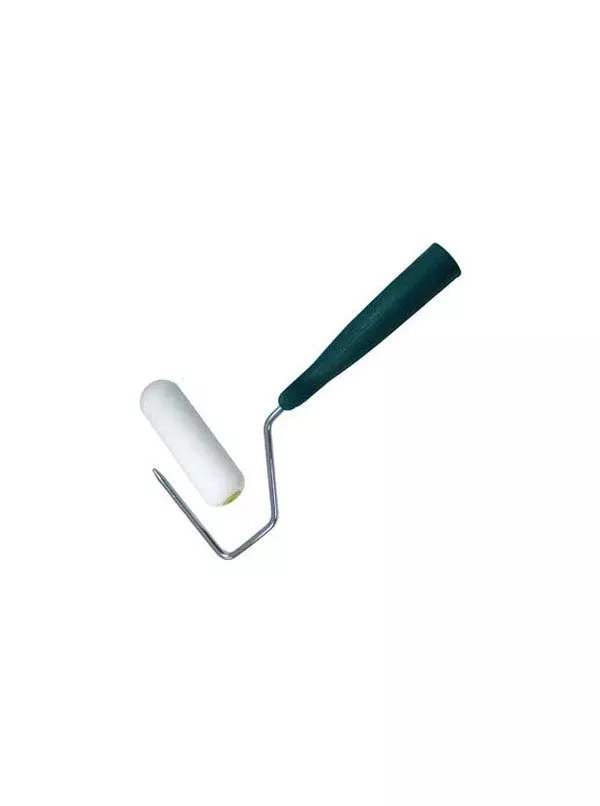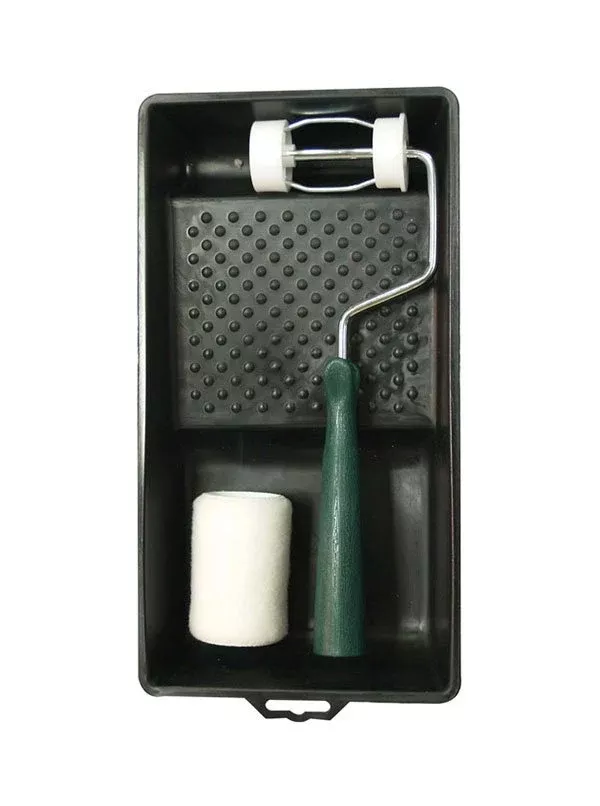
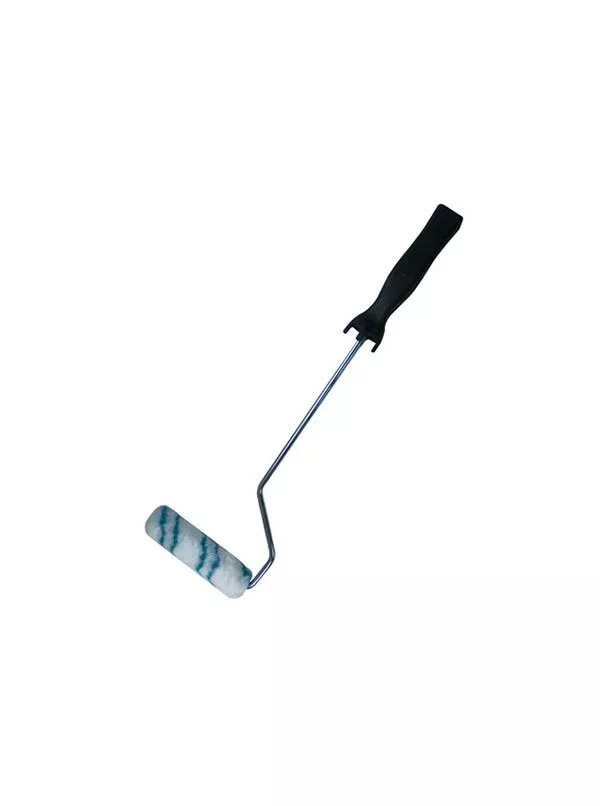
Is this the right tool for your job?
✓CHOOSE THIS WHEN
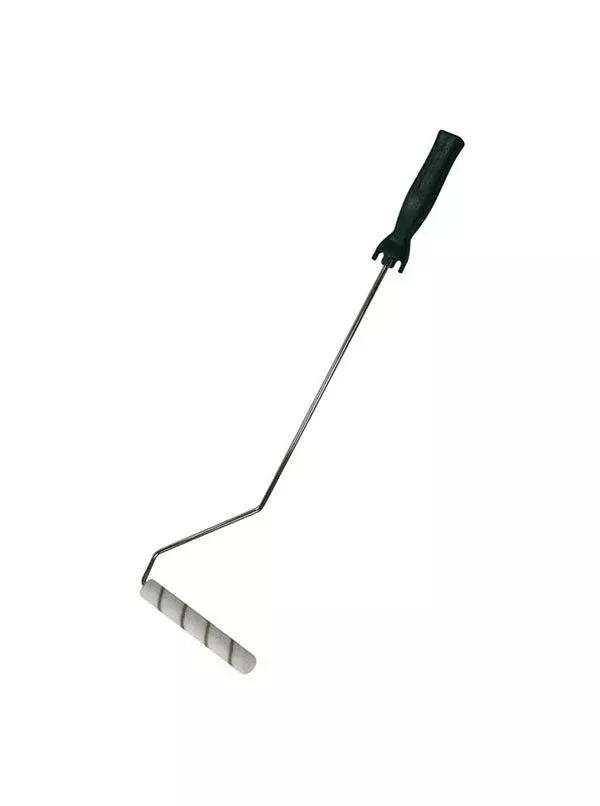
- The documented job is “How to Cut In and Roll Behind Radiators, Toilets, and Appliances”.
✕CHOOSE A DIFFERENT TOOL WHEN
- Open walls and ceilings — 4 inches is a cavity-and-panel width, and the long frame doesn’t change that.
- Fine gloss finishing on visible cabinet doors — the 15/32″ pile leaves more stipple than a gloss cabinet face wants, and the long frame fights precise control; that’s a 1/4″ or foam mini’s job.
- Rough masonry — the woven pile is short and its fine fibers snag on aggregate.
- And it isn’t a substitute for moving the obstacle when you can: where a fixture can be pulled fully clear, a normal roller gives a better finish than reaching past it — the long frame is for what you can’t move.
Jobs this tool does
EXACT JOB METHODS FOR RICHARD №94016✓ Job guideHow to Choose and Set Up a Roller FrameOPEN JOB GUIDE →✓ Job guideHow to Cut In and Roll Behind Radiators, Toilets, and AppliancesOPEN JOB GUIDE →✓ Job guideHow to Paint the Wall Behind a RadiatorOPEN JOB GUIDE →
How the pros run it
01
Load for the reach, not the surface
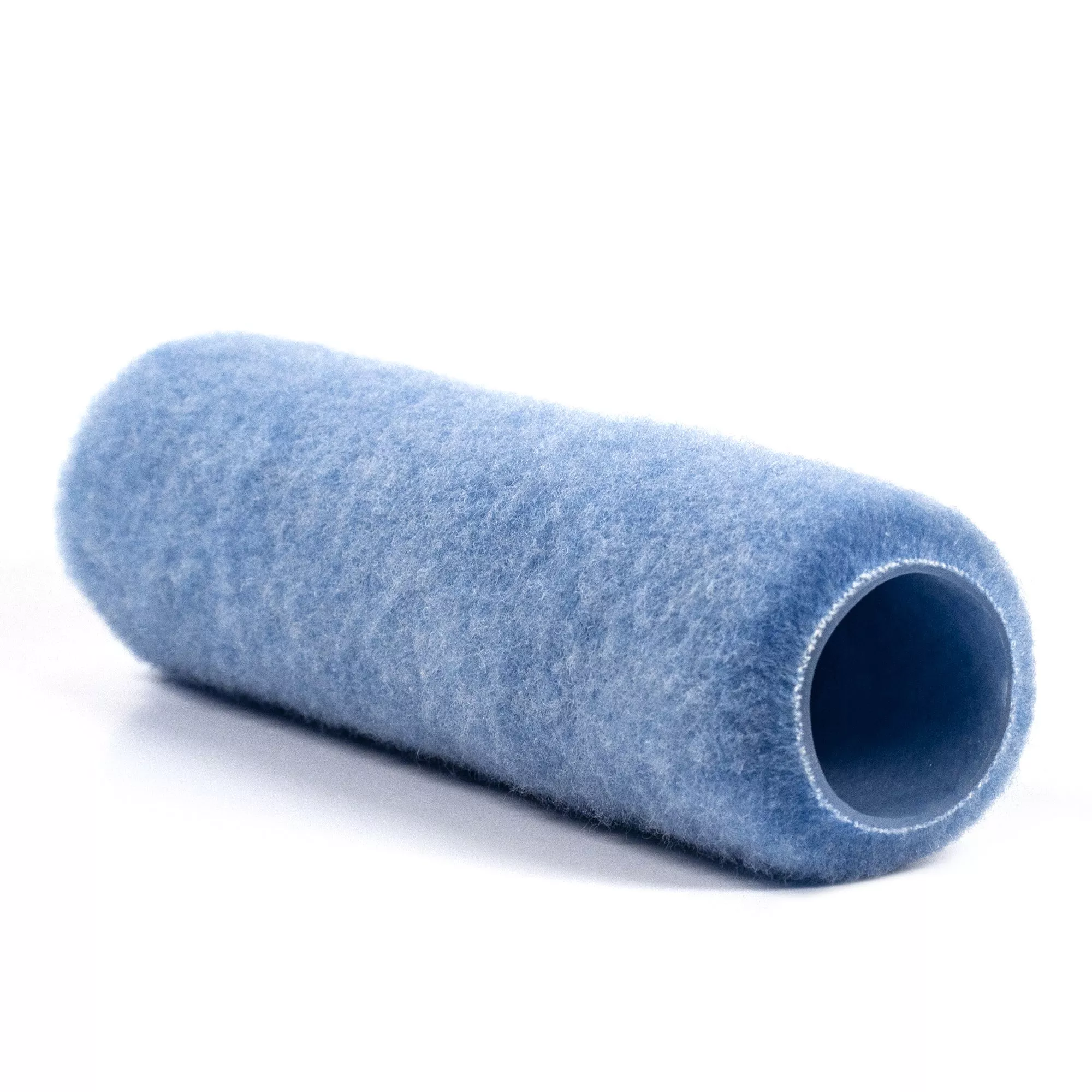
into blind cavities, err light — an overloaded cover drips where you can’t blot it, and 15/32″ carries enough to drip. Mind the leverage: a 16-inch frame multiplies any sideways pressure into flex and skate; keep the cover square to the wall and let the pile deliver the paint rather than pushing. De-lint first: even a lint-free woven cover carries loose manufacturing fiber — tape-peel or wash-and-spin it before the first load, because you can’t groom the film behind a radiator. Accept the finish standard of the location: hidden walls are coverage, not show — don’t chase a lap-mark-free finish where no light will ever rake. Clean and keep: woven covers wash and reuse — scrape, rinse to clear water, spin, stand on end to dry.