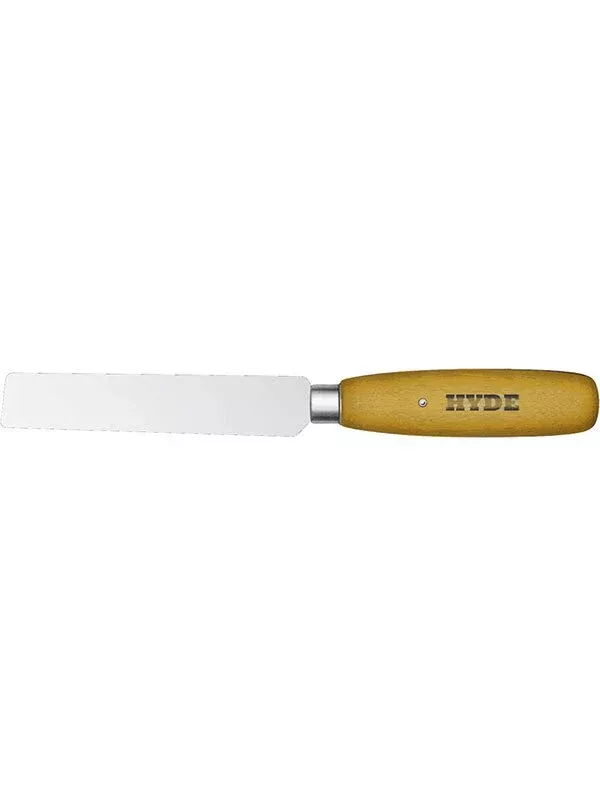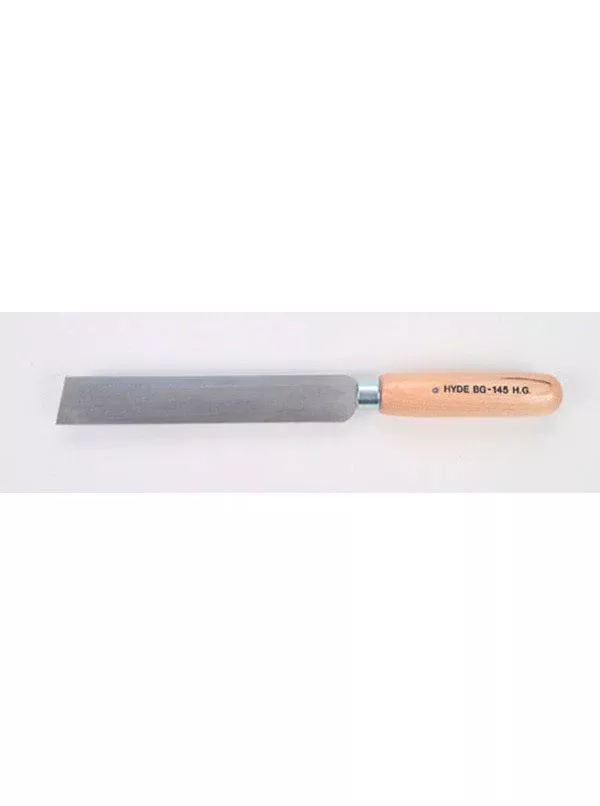
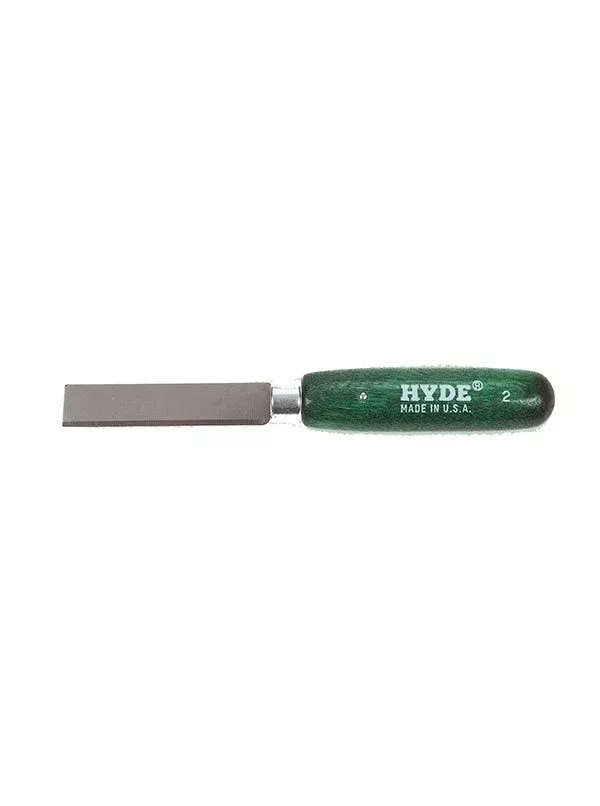
Is this the right tool for your job?
✕CHOOSE A DIFFERENT TOOL WHEN
- Long production runs — three inches of narrow blade is a detail-and-touch-up tool, not the knife for slabbing or long draw cuts; step up to the 3, 5, or 6.
- Heavy hide and sole leather — the light .058″ blade flexes where dense stock needs the sole skiver’s (55190) heavier steel.
- Belting and rubber force work — the narrow bench blade and bare handle are wrong for two-handed cutting through a conveyor belt; that is the .083″ full-size square points, guarded where policy requires.
- Prying or twisting — the narrower blade gives up a little lateral strength for its access, so don’t use it as a lever.
- And it is not itself the primary skiver: it finishes and reaches corners; the running feather belongs to the 55170.
Jobs this tool does
EXACT JOB METHODS FOR HYDE №50100✓ Job guideHow to Choose a Pointed Knife vs a Square-End KnifeOPEN JOB GUIDE →✓ Job guideHow to Prepare a Cemented Leather Lap JointOPEN JOB GUIDE →
For these jobs—use this instead
THE JOB, THE REASON, AND THE BETTER TOOL✕ Heavy hide and sole leatherThe light .058″ blade flexes where dense stock needs the sole skiver’s (55190) heavier steel. BETTER TOOL Leather Skiver Knife, 6-3/4″ x 1″ 55190 →✕ The running feather itselfAnd it is not itself the primary skiver: it finishes and reaches corners; the running feather belongs to the 55170. BETTER TOOL Thin Skiver Knife, 5-1/8″ x 5/8″ 55170 →
How the pros run it
01
Narrow means access, not strength — respect the trade-off
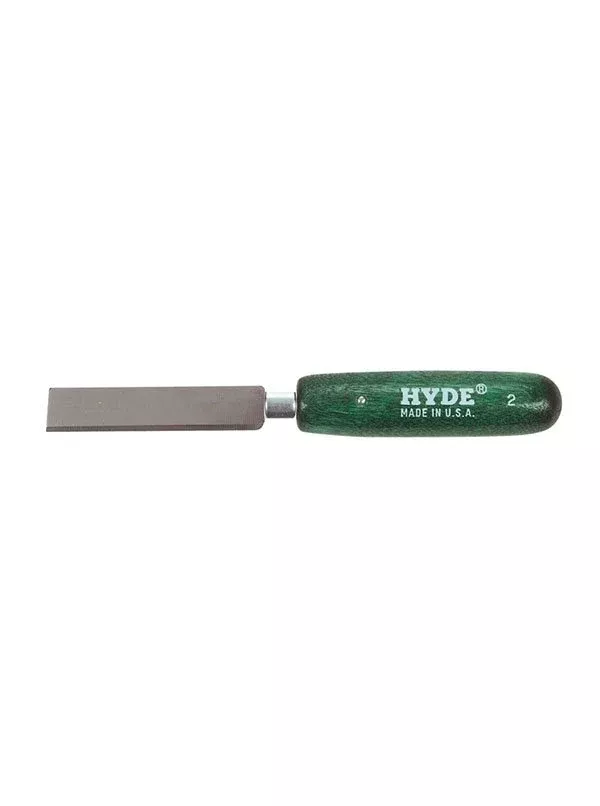
The 11/16″ blade is a hair less stiff laterally than a 3/4″ one; let it cut, don’t pry sideways with it, and it will hold a line all day. Lay it flat for the touch-up shave. Skiving-style work with the 2 uses the same near-flat, slightly skewed, off-the-edge stroke as the skiver — spine barely lifted, the edge slicing forward and out. Use a sacrificial surface every time: the square end guards the layer beneath, but the edge still cuts through to the board, so work over scrap. Keenness does the work. A skiving-companion knife has to be razor-keen or it tears instead of shaving; strop it in rhythm, and stone it when the strop stops bringing it back. High-carbon steel rewards upkeep: hone and strop it for years of service, and wipe it dry after cased-leather or damp work, because carbon steel can rust overnight where a utility knife’s consumable blades would simply be snapped off and thrown away.