Is this the right tool for your job?
✕CHOOSE A DIFFERENT TOOL WHEN
- Not the fine close-work knife — tight cutouts and controlled short cuts are the 1’s (55000) strength; the 2 is the longer stroke.
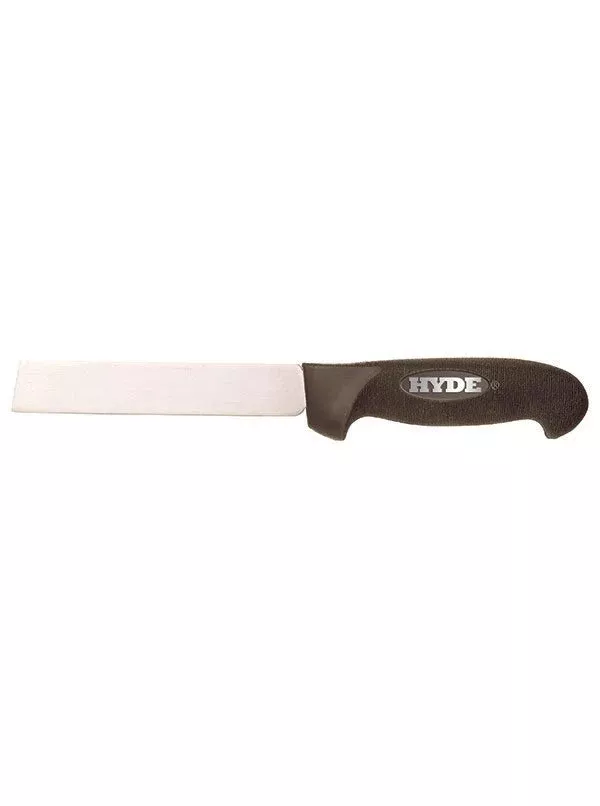
- Not a square-end tool — it punctures the layer beneath, the opposite of the square point’s guarantee.
- Not a curve-follower — swept contour lines are the Paris curve’s job (55300); this is a straight blade.
- Not a station blade — it is a whole riveted knife, not a consumable mill blade for a cutting-floor handle (57xxx).
- Not a pry bar — the fine point and light 17-gauge blade are for cutting, not the abuse the 61080 stub is built for.
Jobs this tool does
EXACT JOB METHODS FOR HYDE №55050✓ Job guideHow to Choose a Pointed Knife vs a Square-End KnifeOPEN JOB GUIDE →✓ Job guideHow to Cut Internal Slits and Cutouts in Leather and Flexible SheetOPEN JOB GUIDE →✓ Job guideHow to Start a Cut Inside a Leather PanelOPEN JOB GUIDE →
For these jobs—use this instead
THE JOB, THE REASON, AND THE BETTER TOOL✕ Fine close workTight cutouts and controlled short cuts are the 1’s (55000) strength; the 2 is the longer stroke. BETTER TOOL Sharp Point 1, 3/4″ x 9/16″ 55000 →✕ Curve followingSwept contour lines are the Paris curve’s job (55300); this is a straight blade. BETTER TOOL Paris Curve, 3-1/4″ x 9/16″ 55300 →✕ PryingThe fine point and light 17-gauge blade are for cutting, not the abuse the 61080 stub is built for. BETTER TOOL Heavy Duty Bevel Point BG268, 2″ x 1″ 61080 →
How the pros run it
01
The sacrificial surface, every time
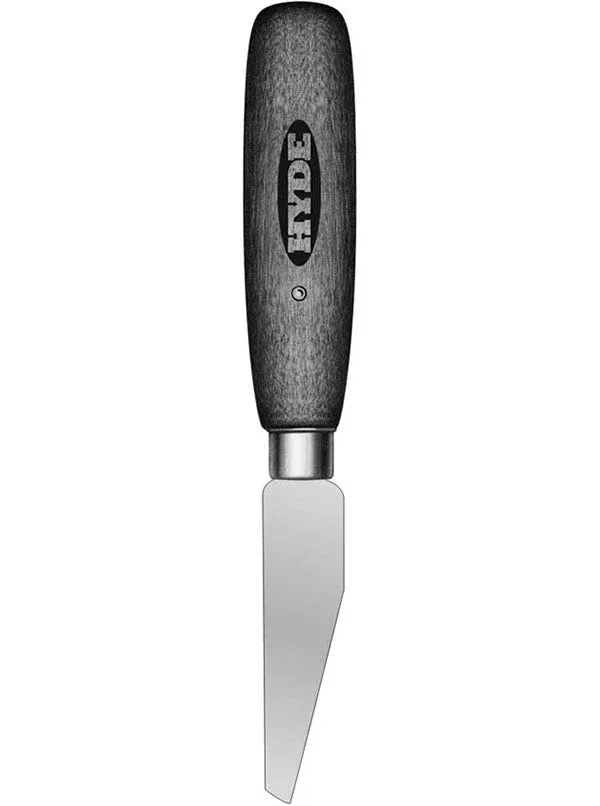
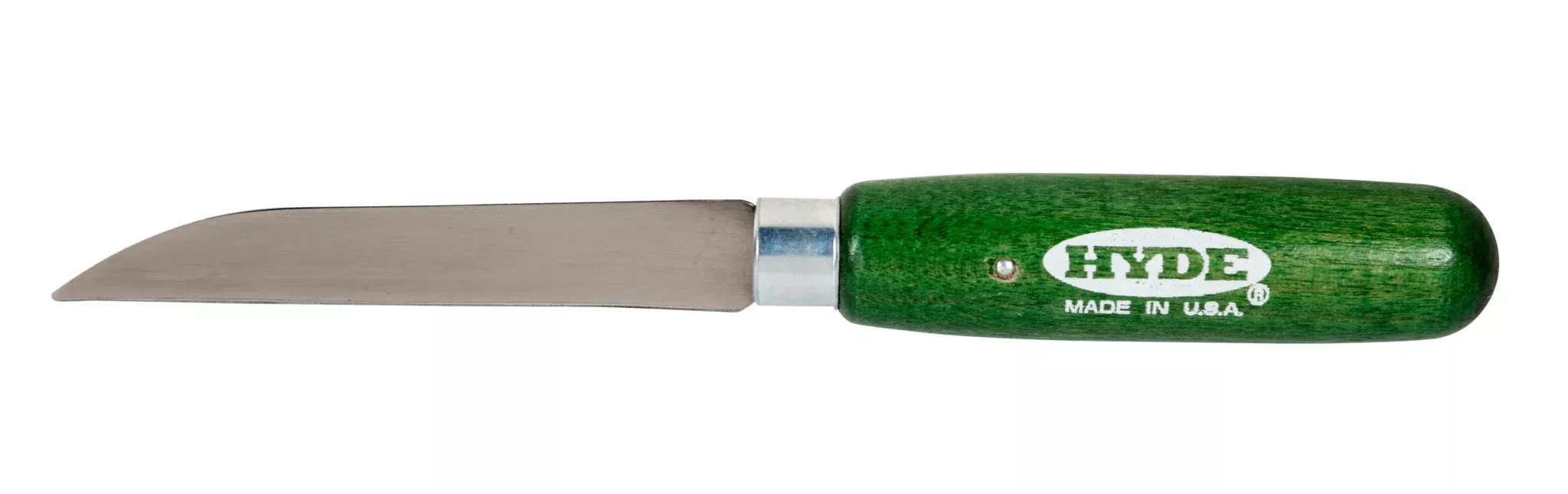
Like every pointed knife here, the 2 cuts through to whatever lies beneath — so inside starts happen over a board or a lifted pinch of material, never over a surface that matters. Commit the longer stroke. The 2’s advantage is the single long pull; hesitation on a long inside cut lets the line wander, so draw it continuously with the point leading. Angle. Steep to pierce, laid down to draw. Keep the point. Every cut starts with the tip, so a rounded point costs more here than a tired edge; hone the point above all, and never twist or pry with it. Edge and rust. High-carbon cutlery steel — hone on a stone, wipe dry after wet, adhesive, or oily work; the re-takeable keen edge is the return on a riveted personal knife.