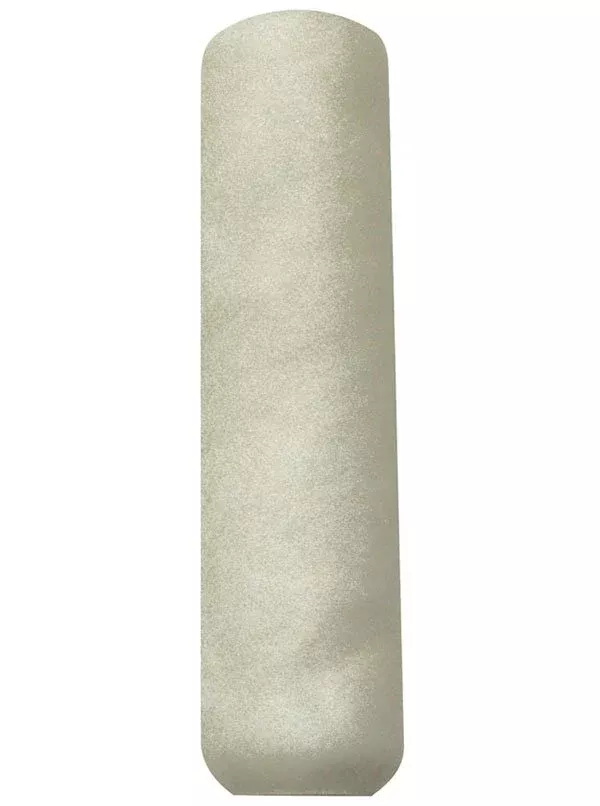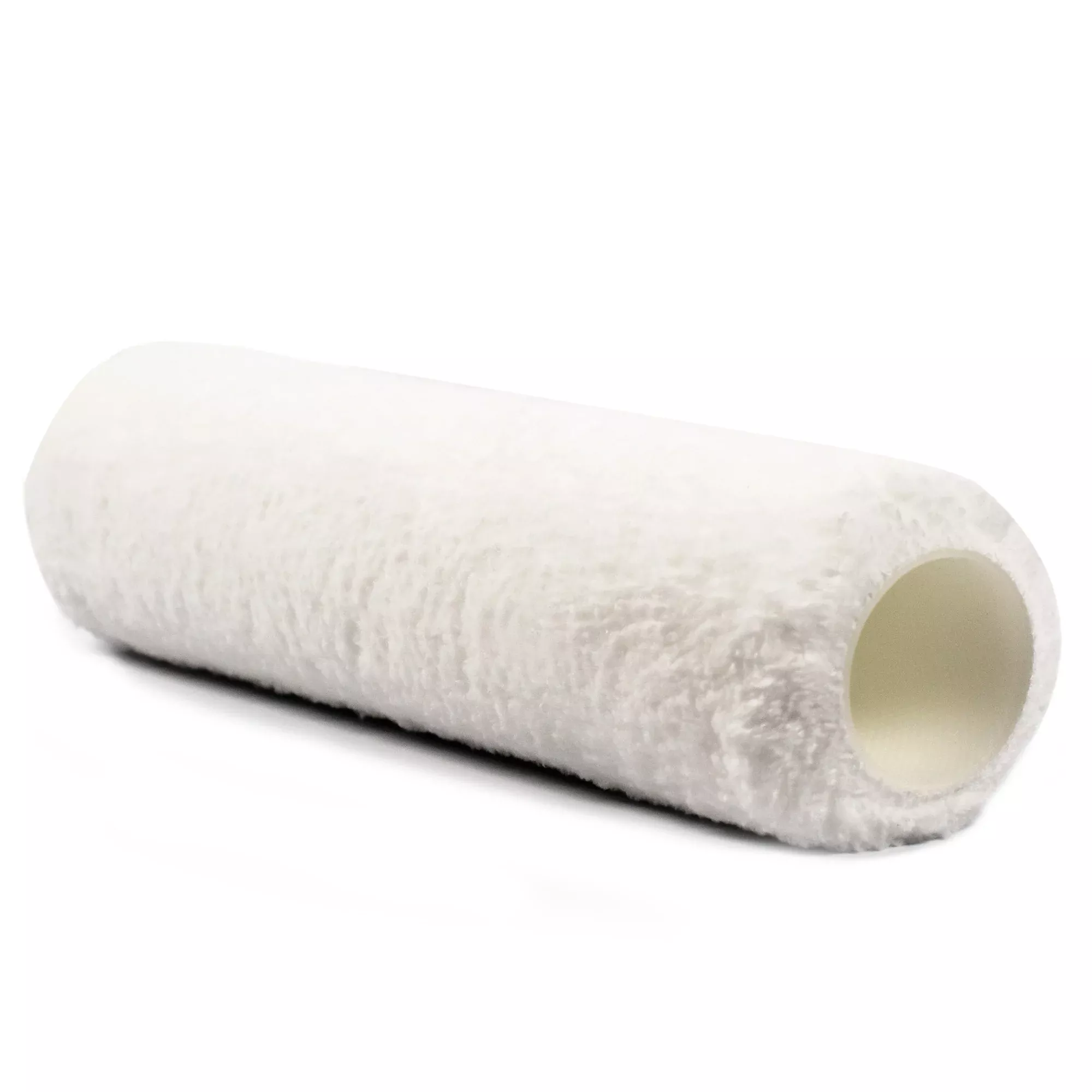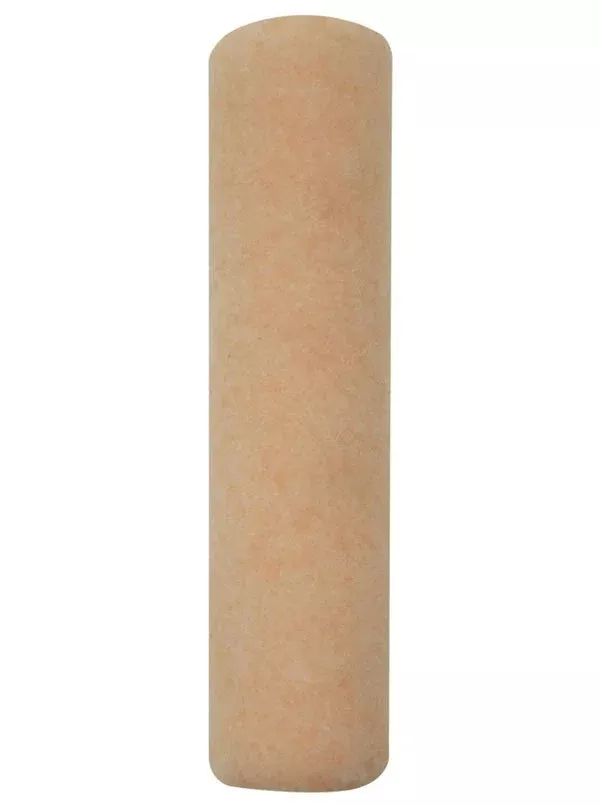
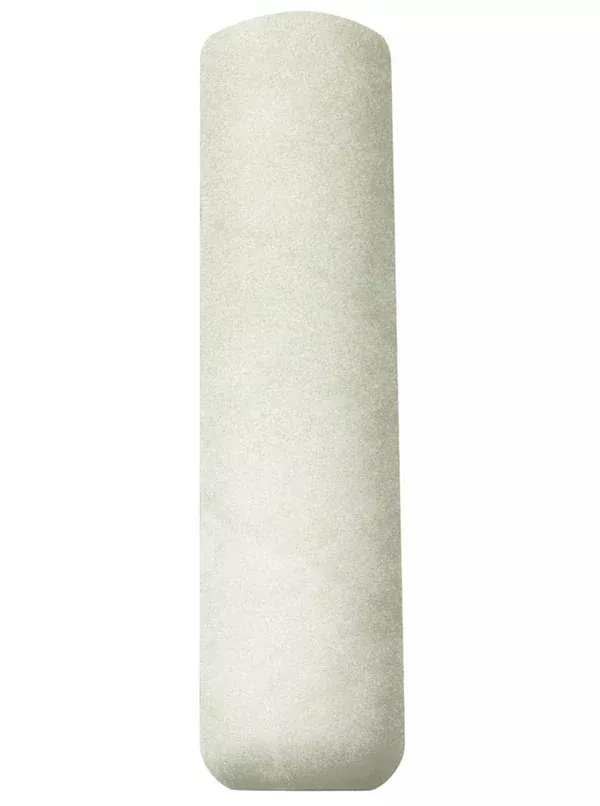
Is this the right tool for your job?
✕CHOOSE A DIFFERENT TOOL WHEN
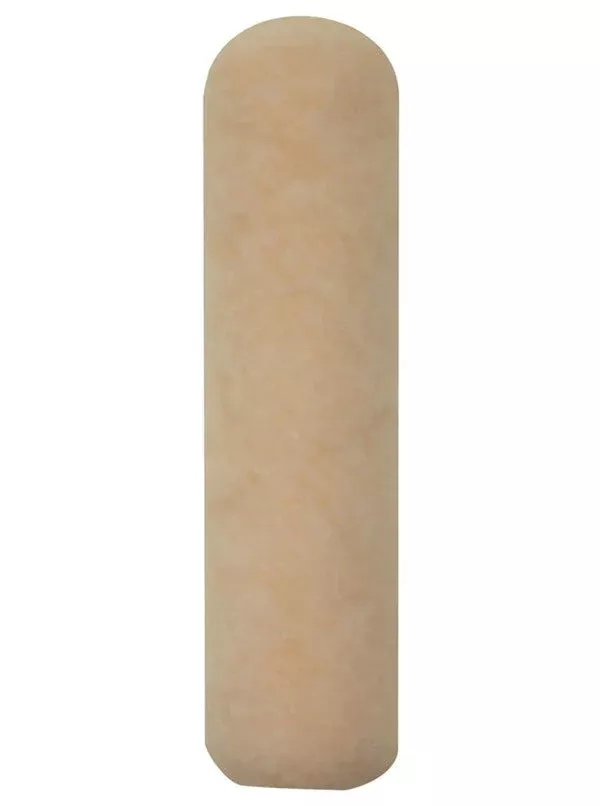
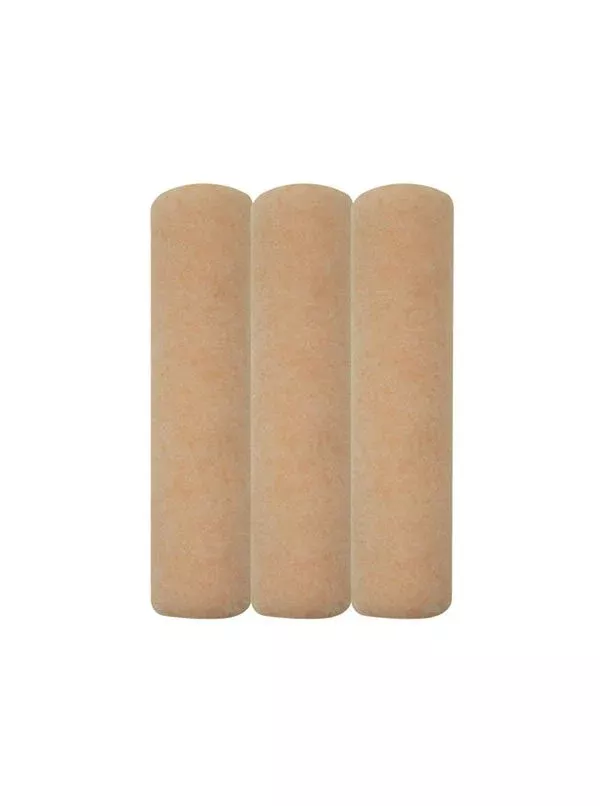
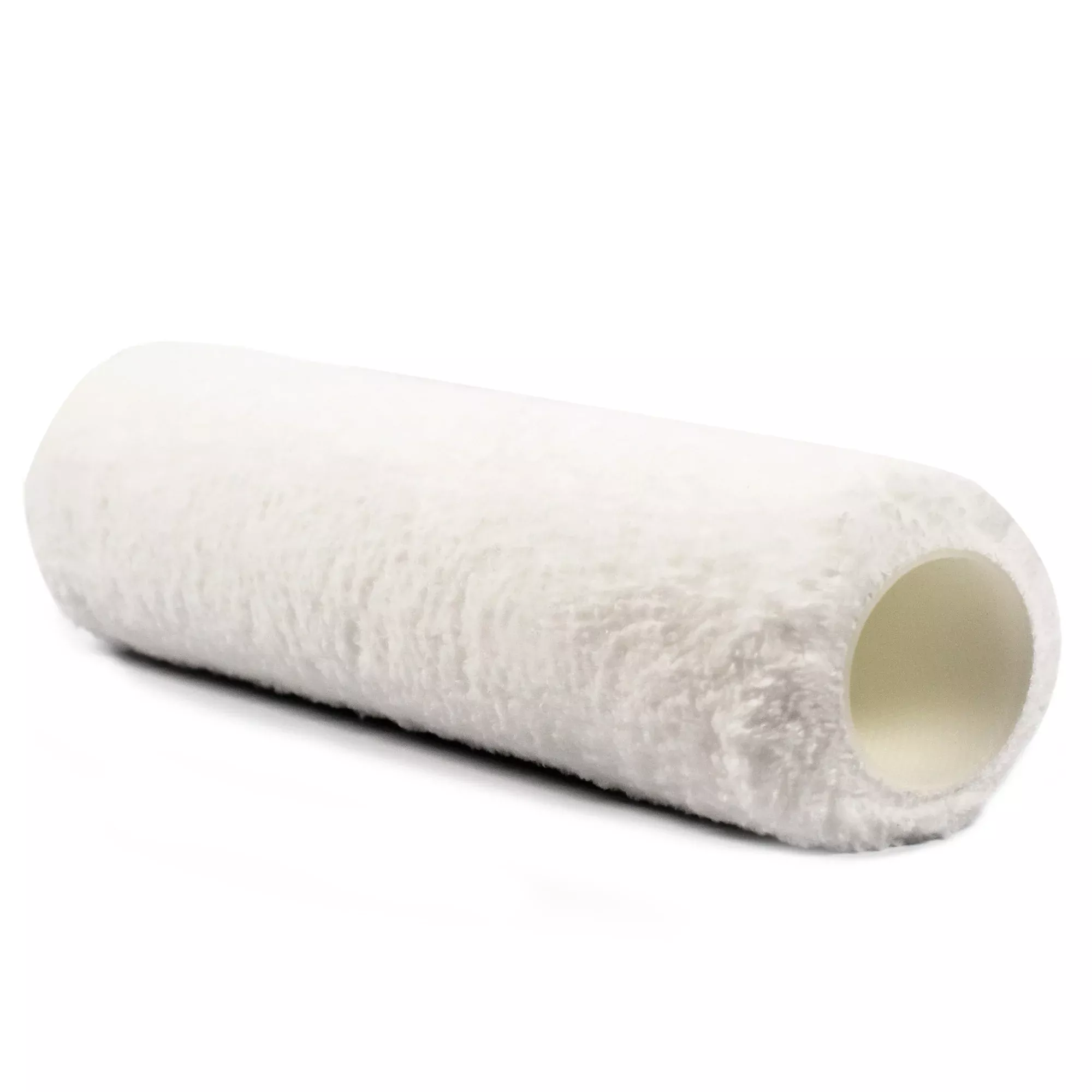
- On smooth drywall a 5/8″ nap lays a heavy stipple, flings spatter as the long fibers whip off the surface, and leaves fat paint beads at every pass edge — a wall that looks textured because the cover was.
- It’s wrong for any fine-finish or gloss surface (step down to a 3/8″ or a foam), and it’s wrong for the genuinely rough end — coarse stucco, open concrete block, fieldstone — where the 5/8″ leaves pinholes at the crater bottoms and you should step up to a 3/4″–1-1/4″ nap and accept cover sacrifice on the abrasive surface.
How the pros run it
01
A 5/8″ nap carries a large load, so load control is the skill
distribute each load away from the wet edge before you fill, or the cover dumps a heavy stripe. On texture, roll a little slower so the long fibers settle into the valleys instead of skating the peaks, and resist pressing — pressure pushes paint past the fiber tips and floods the high spots while starving the low ones, the opposite of what a medium nap is for. Keep the wet edge alive across the textured field, and lay off in one direction. The woven cover sheds little, but de-lint it once before the first load anyway. Because it resists matting, it rewards washing and reuse rather than disposal.