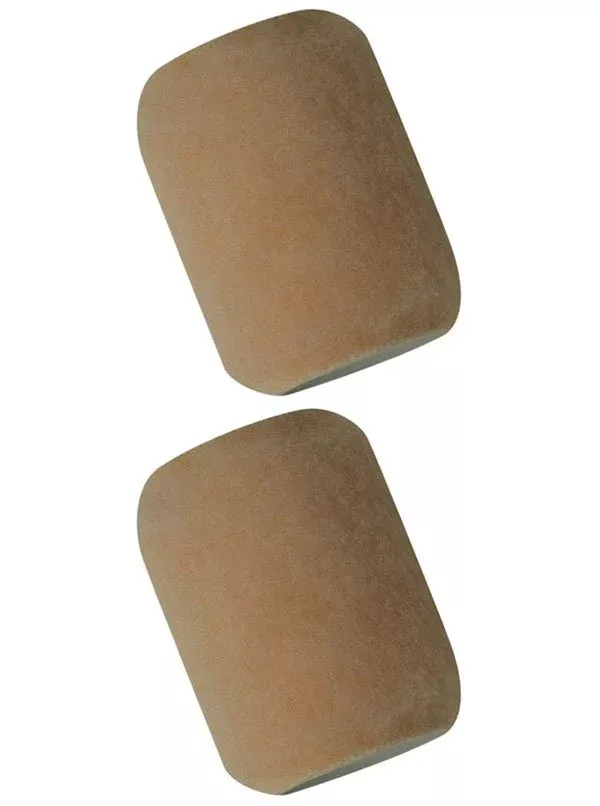
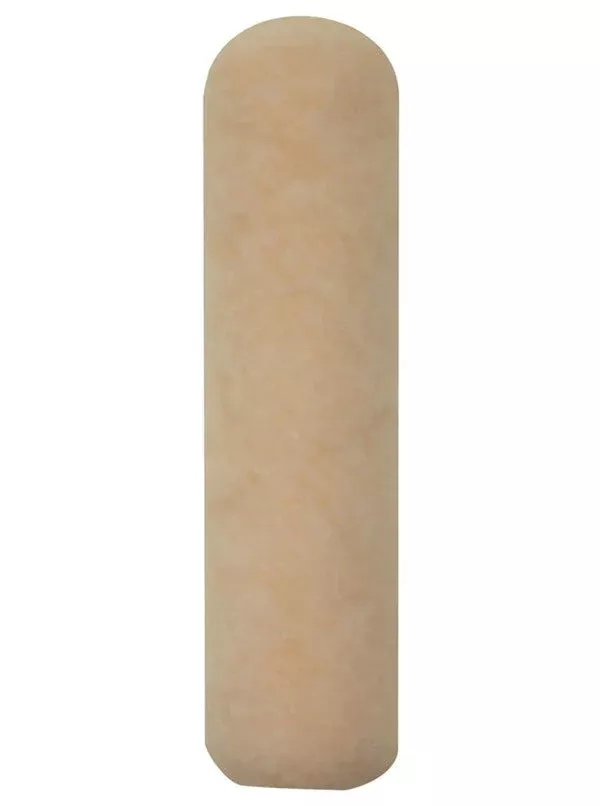
Is this the right tool for your job?
✕CHOOSE A DIFFERENT TOOL WHEN
- Genuinely smooth walls under sheen. On level-4/5 drywall or a skim coat, the 1/2″ lays an orange-peel stipple you will see at every raking light — and in satin or semi-gloss that stipple is a defect, not a texture. Smooth-and-sheen is the short-nap microfiber job (Ultra Touch 1/4″/99521, E-volution); smooth-and-flat is the 3/8″ (99302).
- Heavy knockdown, open brick, and masonry. Push past a light-to-medium tooth and the 1/2″ starts painting the peaks and missing the crater bottoms. Heavy knockdown, brick with open joints, T1-11 and rough-sawn siding, and stucco belong to the 3/4″ (99304) and, for true rough masonry, the deepest naps in the catalog — none of which is this cover.
- Epoxy and critical lint-free work. Economy knit-class construction sheds and mats; epoxy floors and finish-critical sheen walls are the woven and microfiber grades’ jobs, one and two tiers up.
For these jobs—use this instead
THE JOB, THE REASON, AND THE BETTER TOOL✕ Genuinely smooth walls under sheenOn level-4/5 drywall or a skim coat, the 1/2″ lays an orange-peel stipple you will see at every raking light — and in satin or semi-gloss that stipple is a defect, not a texture. BETTER TOOL 9″ roller cover, GENERAL PURPOSE series 99302 →✕ Heavy knockdown, open brick, and masonryPush past a light-to-medium tooth and the 1/2″ starts painting the peaks and missing the crater bottoms. BETTER TOOL 9” roller cover, GENERAL PURPOSE series 99304 →
How the pros run it
01
Load full, press light
The deeper nap is a bigger tank; use the capacity by loading it fully, not by leaning on it. Pressure on a half-inch nap squeezes fat edge-beads at the roller’s ends and mats the pile. De-lint first — the economy-grade habit. Reload on sound — full-and-quiet loaded, hiss starved, drips overloaded; the 1/2″ holds more, so your reload interval is longer than with the 3/8″, but the same three signals govern it. Spatter watch: longer naps fling more spatter than short ones, and a knit-class cover more than a woven; slow the first strokes after each reload, when the cover is heaviest, and protect floors and trim. Wash-or-toss by price: cheap enough to discard after a solvent or one-day job; if you keep it, wash until the water runs clear and dry it standing on end. Overnight: wrap airtight, no air means no drying.