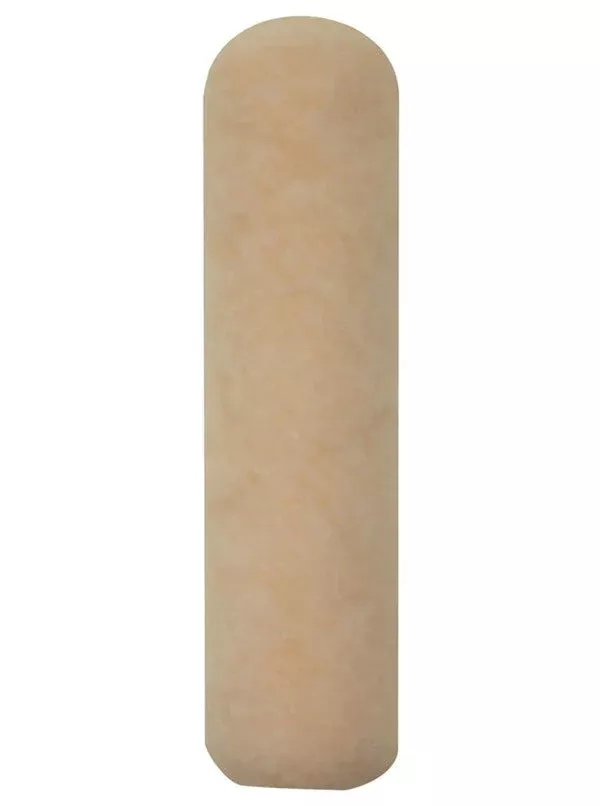
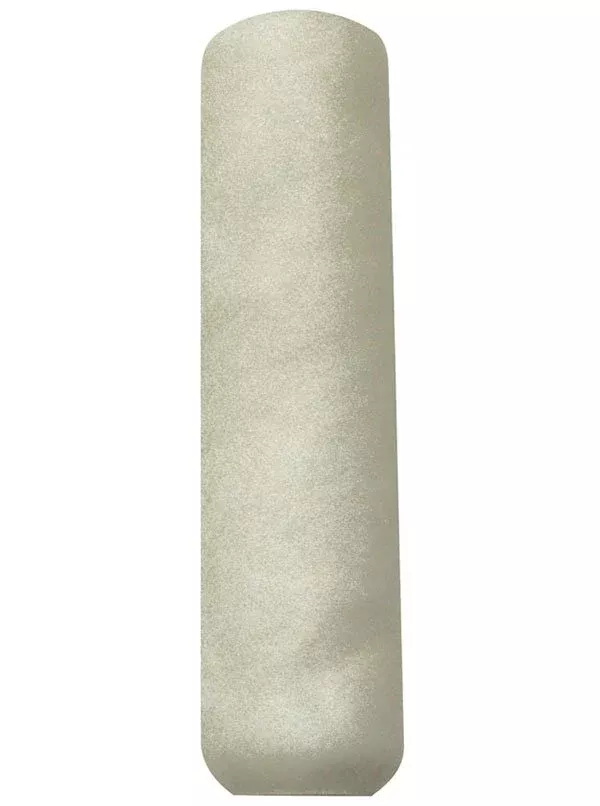
Is this the right tool for your job?
✕CHOOSE A DIFFERENT TOOL WHEN
- Dead-smooth walls.
- On glass-smooth drywall the 1/2″ nap begins to leave a visible stipple a 3/8″ wouldn’t — step down for a truly smooth wall.
- It’s wrong for gloss doors and cabinets (that’s a 1/4″ or foam job), and it’s under-napped for real texture: heavy knockdown, stucco, brick with open joints, and rough-sawn surfaces need a 5/8″, 3/4″, or longer nap that can reach their deeper valleys, and this cover would only paint the peaks.
How the pros run it
01
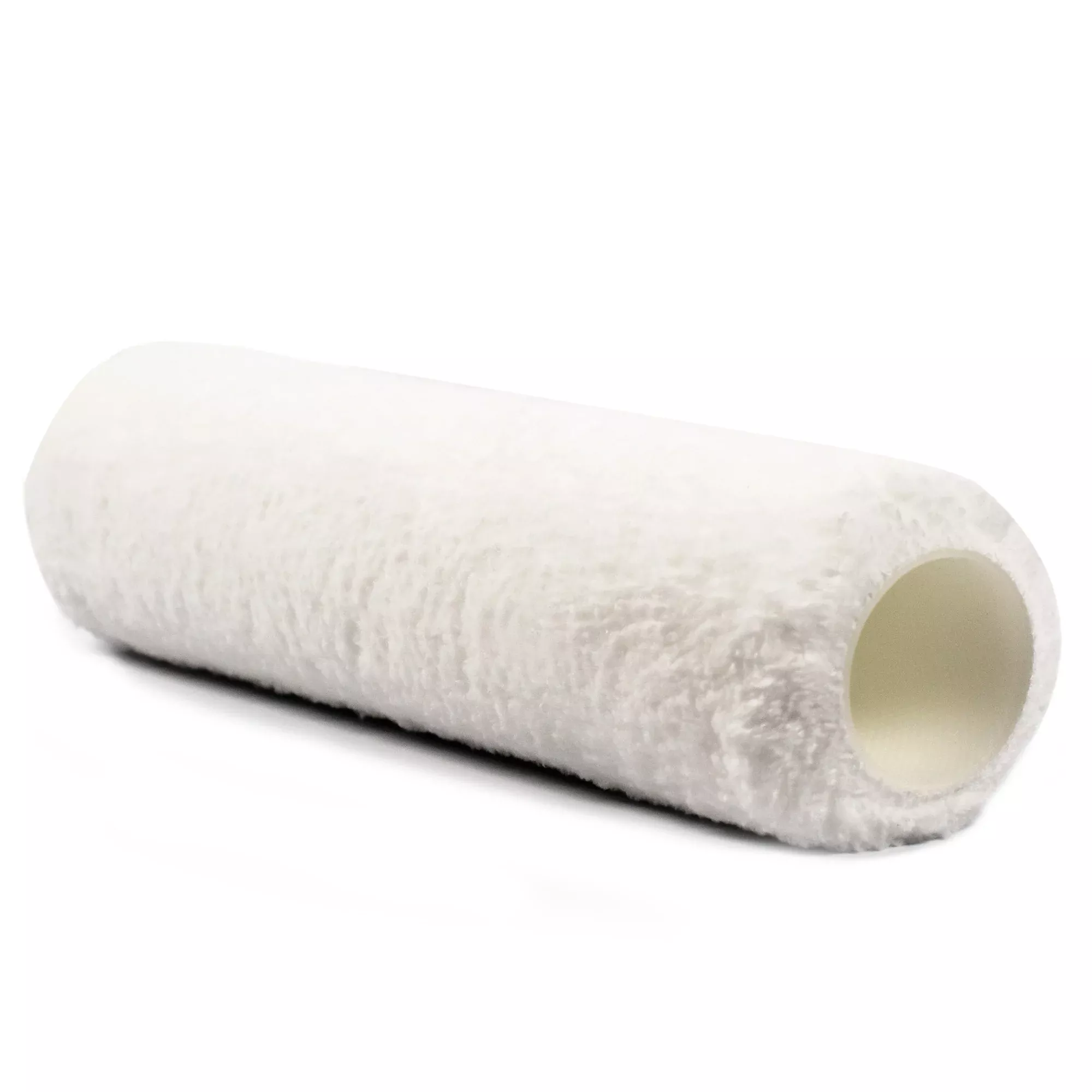
A 1/2″ nap carries a healthy load
enough to make load placement matter: land each new load away from your wet edge and spread it back in, rather than dumping a stripe against finished work. Keep pressure light; the 1/2″ is meant to reach shallow valleys with the weight of the roller, and pressing only floods the high spots. Maintain a live wet edge floor-to-ceiling and lay off in one direction. On ceilings, let the pole and the nap’s load do the work. The woven fabric sheds little, but de-lint it once before the first pass. Because it resists matting and tolerates cleanup, it’s a cover to wash and keep, not to throw away after a room.