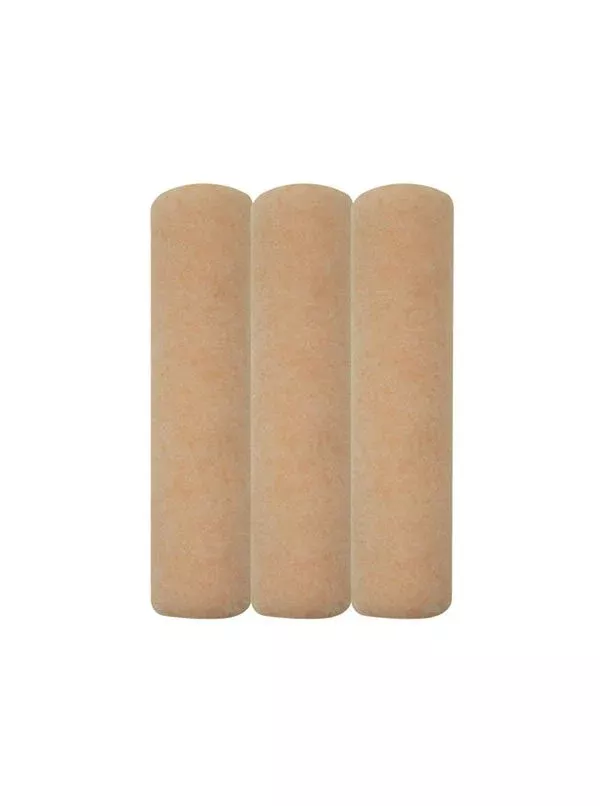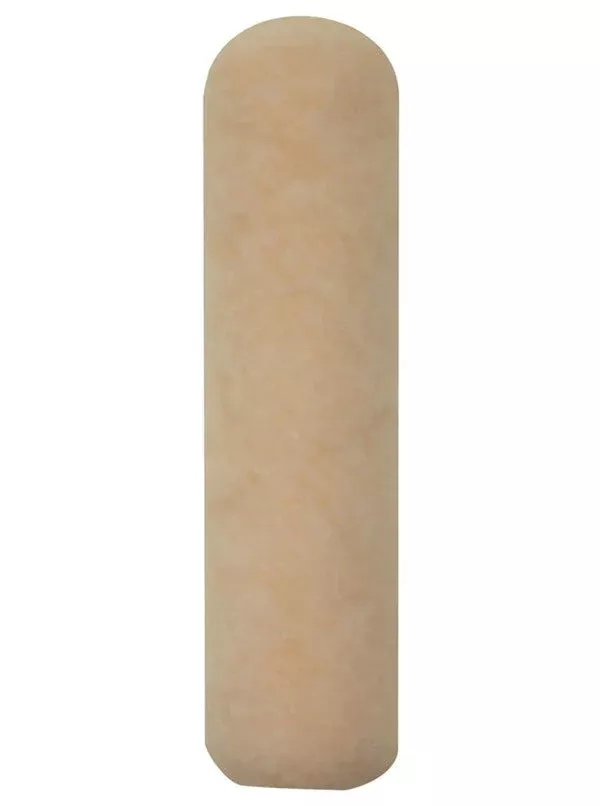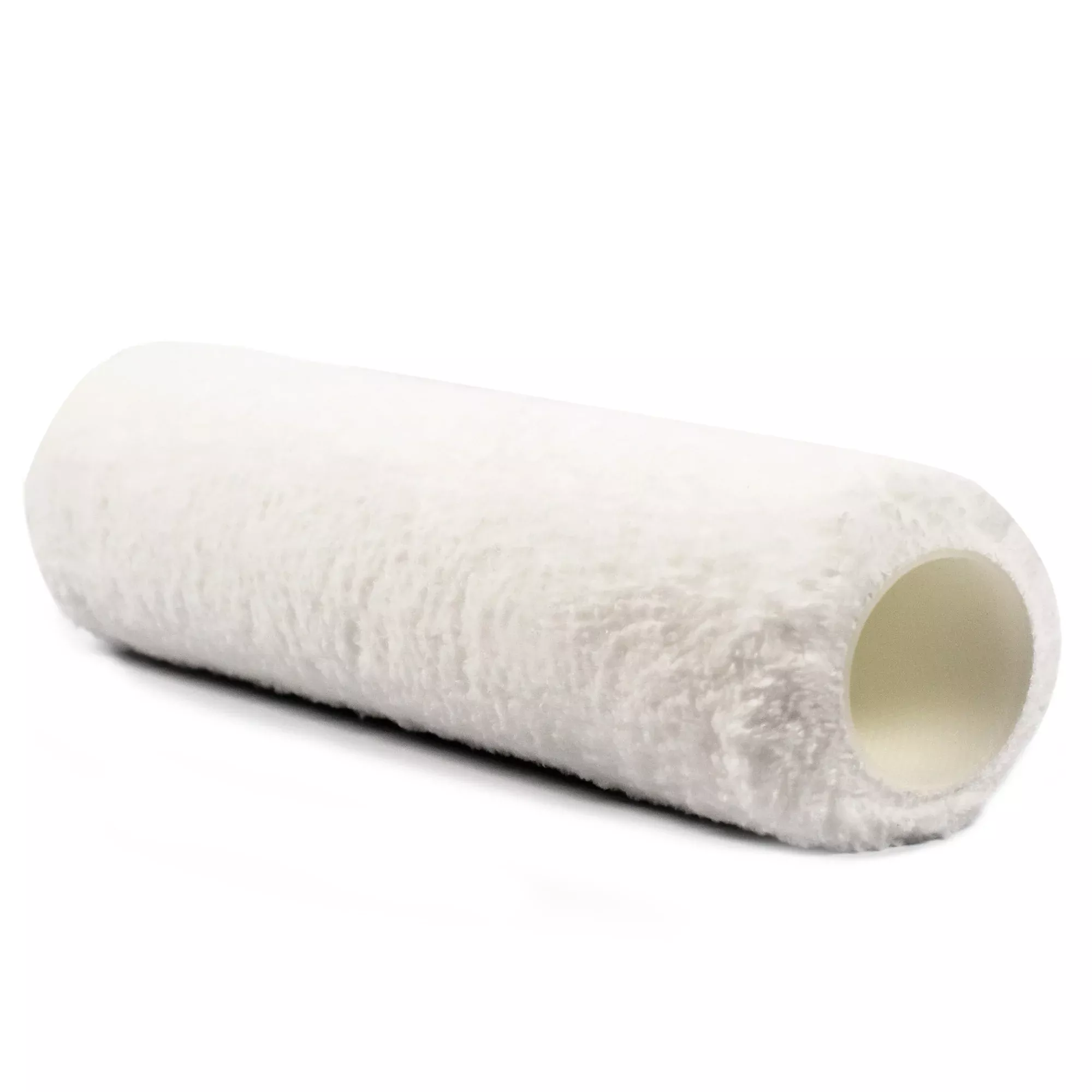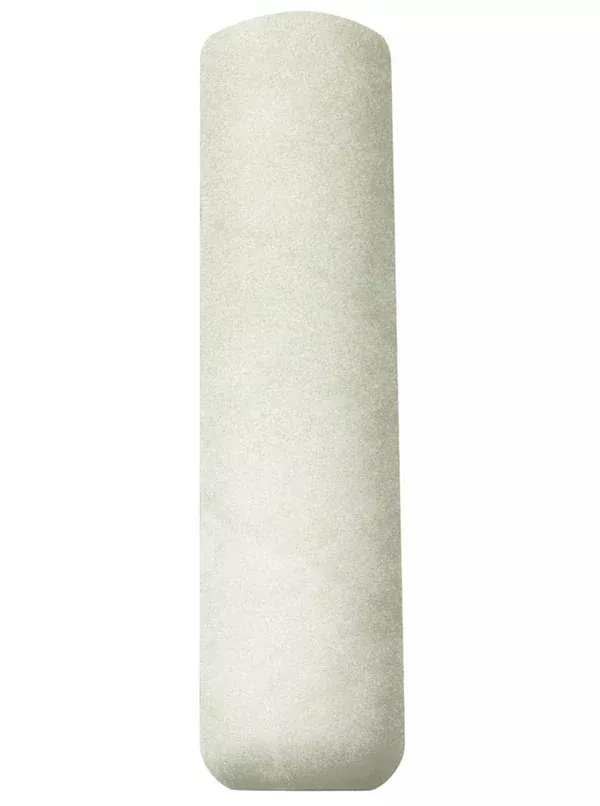
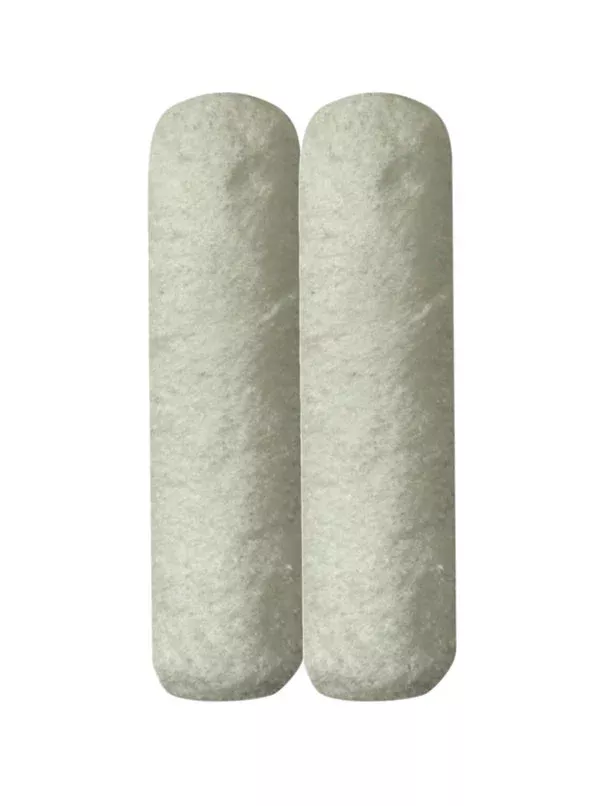
Is this the right tool for your job?
✕CHOOSE A DIFFERENT TOOL WHEN
- Dead-smooth walls and gloss on glass-flat surfaces.
- On truly smooth drywall or a skim coat, a 1/2″ pile lays visible stipple where a 3/8″ or 1/4″ would lay a flatter film — over-napping a smooth wall is a self-inflicted texture.
- It is also not a masonry or rough-surface cover: 1/2″ reaches light texture, not the craters of stucco, brick, or block, and a fine microfiber-class pile snags and tears on abrasive mineral surfaces.
- Smooth-and-flat belongs to the shorter naps; rough-and-mineral belongs to the polyester and long-nap rungs.
- This cover’s territory is the middle ground — light texture, fine finish — and it’s a real and useful middle.
How the pros run it
01
Light hand, always — a fine-finish cover rewards it and a heavy hand ruins it
The capacity of a 1/2″ pile is there to be released gently; press it into the wall and you flood the texture, squeeze fat edges, and throw spatter. Load off a screen or grid until saturated but not dripping, distribute the load off your wet edge, then lay off each section with light, single-direction passes to align the stipple one way — the move that turns “painted” into “finished.” De-lint the new cover before the first pass. Cleanup: as a dense fine-finish pile, it rinses more slowly than a coarse knit — work warm water through the nap until it runs genuinely clear, because paint left at the fiber base dries into a core that coarsens the next job’s finish; with two in the pack, a clean cover and a spare is the working setup.